A hidden shower leak can silently cause thousands in structural damage. This guide walks you through the signs, a safe DIY test, and when to call a professional plumber in Boca Raton before a small problem becomes a catastrophe. The EPA WaterSense on household leaks notes how much water common household leaks waste each year.
To tell if your shower pan is leaking in Boca Raton, look for visual signs like stained ceilings below, cracked or crumbling grout, loose tiles near the floor, and persistent musty odors. As of October 2026, the most reliable DIY method is the shower pan test, which involves plugging the drain and filling the pan with water to observe for leaks.
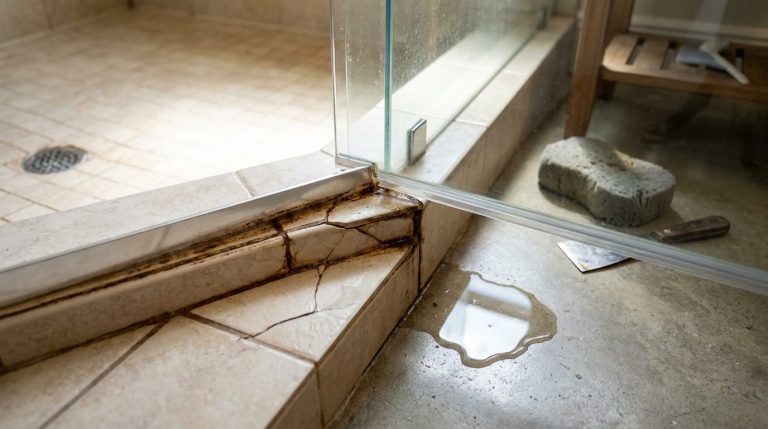
A leaking shower pan often reveals itself through water stains on the ceiling directly beneath the bathroom, loose floor tiles around the shower's base, or a damp, musty smell that won't go away. If you see these signs in your Boca Raton home, a professional inspection is crucial to prevent structural damage.
What Exactly Is a Shower Pan (And Why Do They Fail)?
Before you can spot a leak, it helps to know what you’re looking for. A shower pan (also called a shower base or receptor) is the solid, waterproof floor of your shower. What you see—the tile or acrylic surface you stand on—is just the top layer. The most critical part is the hidden waterproof liner underneath. This liner, typically made of PVC, chlorinated polyethylene (CPE), or hot-mopped tar, is the last line of defense, designed to catch any water that gets through the tile and grout and direct it safely into the drain.
In Florida, especially in areas like Boca Raton with high humidity and homes built on concrete slabs, shower pans are under constant stress. They fail for several reasons:
- Improper Installation: This is the number one cause. If the pan liner was punctured during installation, if the corners weren’t properly sealed, or if the base wasn’t sloped correctly toward the drain, it’s a ticking time bomb.
- Age and Material Degradation: Over 15-20 years, materials can become brittle and crack. The constant cycle of hot and cold water, plus cleaning chemicals, takes its toll. Older homes in Boca Raton might have original pans reaching the end of their lifespan.
- Building Settlement: Florida homes, especially those on slab-on-grade foundations, can shift slightly over time. This movement can create cracks in the shower pan structure or tear the waterproof liner.
- Clogged Weep Holes: The drain assembly has tiny “weep holes” that allow water collected by the liner to escape into the drain. If these get clogged with grout or debris during installation, water gets trapped, saturates the mortar bed, and eventually finds a way out—usually through your subfloor or ceiling.
The Top 7 Telltale Signs of a Leaking Shower Pan in Florida Homes
A leaking shower pan rarely announces itself with a flood. The damage is often slow, hidden, and cumulative. For seasonal residents, it’s especially important to have a neighbor or property manager check for these signs periodically. Here’s what to look for:
- Water Stains on the Ceiling Below: This is the most classic sign for a second-story bathroom. A yellowish or brownish discoloration on the ceiling of the room directly under the shower is a major red flag.
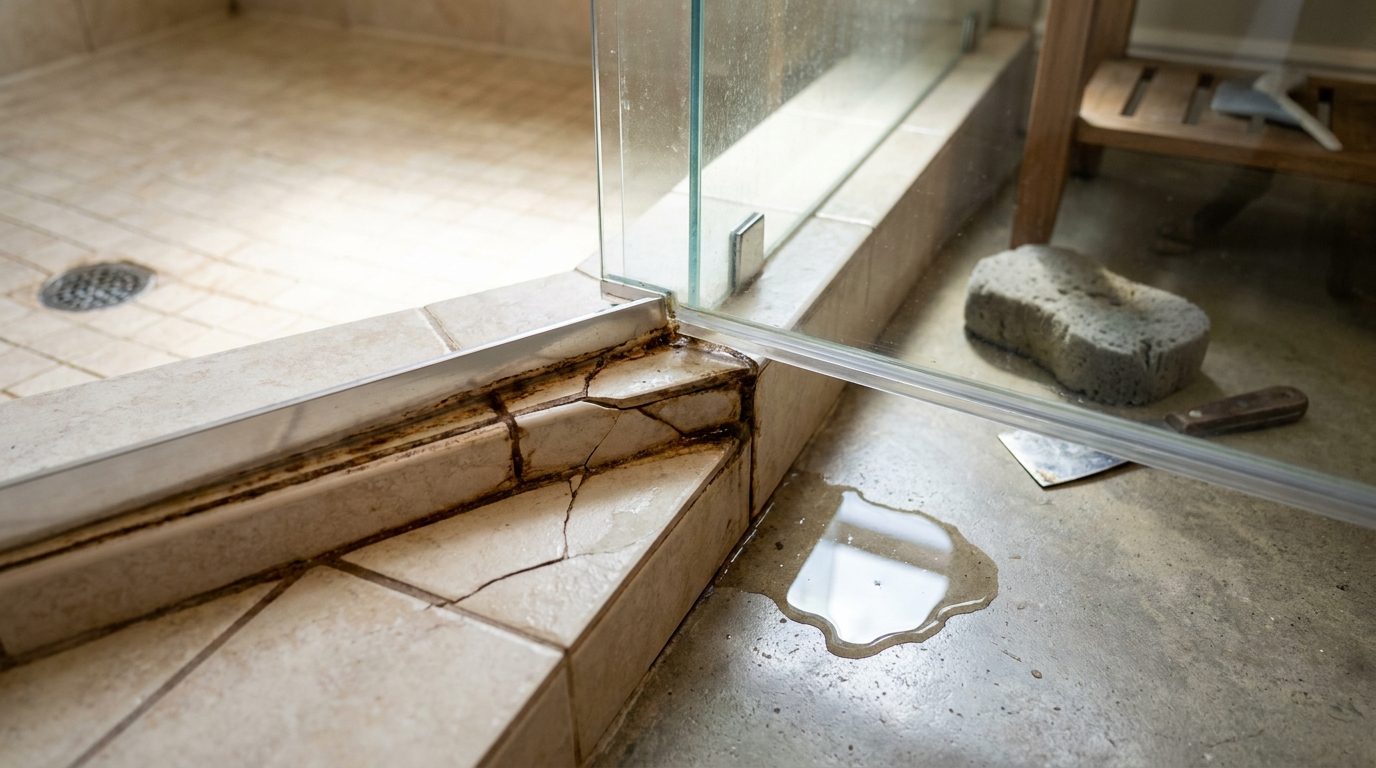
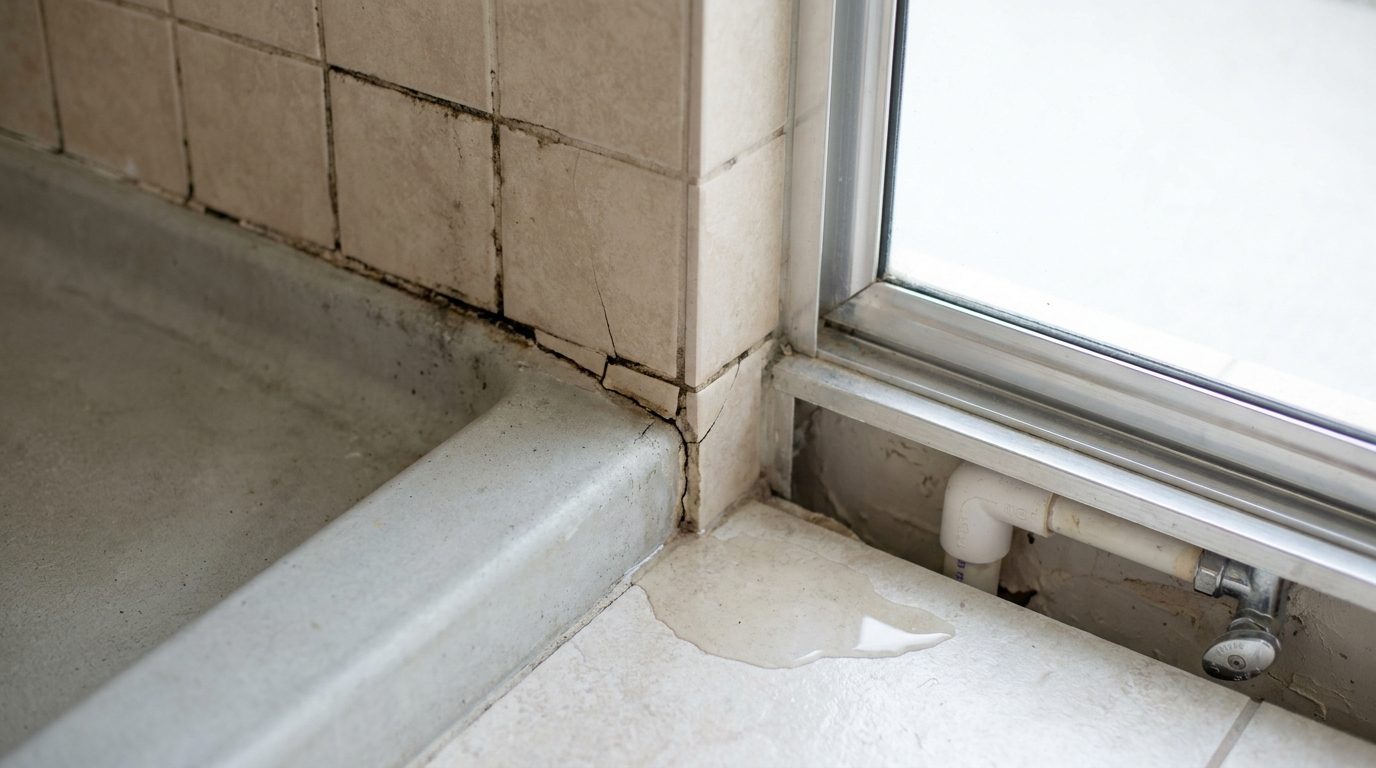
- Loose or Damaged Tiles: If tiles on the shower floor or the bottom rows of the shower walls are loose, hollow-sounding when tapped, or if the grout around them is constantly cracking and crumbling, it means water is getting behind them and saturating the mortar bed.
- Dampness or Water on the Floor After a Shower: If you find puddles on the bathroom floor near the *outside* of the shower after every use, and you’re sure it’s not from a leaky door or curtain, the water could be seeping through the curb (the threshold of the shower).
- A Persistent Musty or Mildewy Smell: Florida’s humidity can make bathrooms smell damp, but if you notice a constant, earthy smell of mold that doesn’t go away with cleaning or ventilation, it’s a strong indicator of trapped moisture inside the walls or floor.
- Damaged Baseboards or Warped Flooring: Check the baseboards and flooring just outside the shower. Peeling paint, swollen or discolored wood, or vinyl flooring that is peeling up are all signs that water is escaping from the shower structure.
- Visible Mold or Mildew Growth: If you see black or green spots growing on the baseboards, along the bottom of the drywall near the shower, or on the grout lines that keep coming back no matter how much you clean, you have a chronic moisture problem.
- Cracked Grout and Peeling Caulk: While not a direct sign of a pan failure, consistently cracked grout or caulk that pulls away from the seams is a major entry point for water. If these seals are compromised, it’s only a matter of time before the pan’s liner is put to the test.
"The most expensive plumbing problem is the one you ignore. A small, persistent shower leak can compromise your home's entire structure over time."West Boca Water Heaters, Owner Perspective
How Can I Safely Test for a Shower Pan Leak Myself?
If you suspect a leak, there is one safe and definitive test a homeowner can perform. This is often called a “flood test” or “24-hour test.” It isolates the shower pan to confirm if it, and not the plumbing or faucet, is the source of the leak.
SAFETY FIRST: This test involves water. If you already have significant visible water damage or are dealing with a second-floor bathroom showing major ceiling stains below, it’s safer to call a professional. Proceeding could worsen the damage. Do not attempt this if you are not comfortable with the steps.
Here’s how to do it:
- Get the Right Tool: You need an inflatable test ball or a friction-fit drain plug from a hardware store. It must be the correct size for your shower drain pipe (usually 2 inches). A simple drain stopper that sits on top won’t work; you need to plug the pipe *below* the drain grate.
- Seal the Drain Pipe: Remove the metal drain grate. Insert and secure the test plug inside the vertical drain pipe, ensuring a watertight seal. The goal is to prevent any water from entering the drain plumbing.
- Mark the Water Level: Place a piece of masking tape on the inside of the shower curb or wall to mark a starting point.
- Fill the Shower Pan: Carefully pour water into the shower pan using a bucket. Do NOT use the shower faucet, as a leak in the faucet valve could give a false positive. Fill the pan with water up to about 1 inch below the top of the shower curb (the threshold you step over). Do not overfill it.
- Mark and Wait: Once filled, use a pencil or marker to precisely mark the water level on your piece of tape. Now, you wait. Let it sit for at least 8 hours, but 24 hours is ideal. Do not use the shower during this time.
- Check the Results: After the waiting period, check two things:
- The Water Level: Has the water level dropped below your mark? If so, and you’re sure the plug is secure, the pan liner is leaking.
- The Area Below: Carefully inspect the ceiling or area directly below the shower. Are there any new or worsening drips or water stains? Any sign of water confirms a leak.
If the water level drops or you see new signs of water, the test is positive. Your shower pan liner has failed. The next step is to call a licensed plumber to assess the extent of the damage and discuss repair or replacement options. Do not continue to use the shower.
Shower Pan Leak vs. Drain Leak vs. Tile Leak: What's the Difference?
Not all shower leaks are pan leaks. A professional plumber will diagnose the exact source, but understanding the possibilities helps. Here’s a breakdown of the common culprits.
| Criteria | Tile & Grout Leak | Drain Leak | Shower Pan Liner Leak |
|---|---|---|---|
| Location of Water Damage | Localized dampness in walls, often near corners or fixtures. Mold on grout lines. | Directly around the drain. Often a very fast, noticeable leak on the ceiling below when the shower is running. | Widespread damage to the subfloor. Stains on the ceiling below can be large and appear away from the drain. Loose floor tiles. |
| Primary Cause | Cracked grout, failed caulk seals, porous unsealed tile. | Failed gasket or seal where the drain assembly connects to the shower pan or drain pipe. | Punctured or cracked waterproof liner, clogged weep holes, improper installation, building settlement. |
| DIY Fixable? | Sometimes (re-grouting or re-caulking small areas). But this often masks a deeper problem. | No. Requires accessing the plumbing connection, which is best left to a licensed plumber. | Absolutely not. This is a major repair requiring full removal of the shower floor. |
| Professional Test | Visual inspection, moisture meter readings on surrounding drywall. | Isolating the drain by pouring water directly into it (with the pan dry). | The flood test described above is the definitive method. |
| Typical Repair Cost | Low ($150 - $400 for professional re-grouting/sealing). | Moderate ($300 - $800), depending on access. | High ($2,000 - $5,000+), as it almost always requires a full shower floor replacement. |
| Best For | Minor water entry issues where the underlying pan is still intact. | Leaks that only occur when water is actively flowing down the drain. | When the flood test fails or there is widespread subfloor damage and loose tiles. |
Key takeaway — While bad grout or a leaky drain are problems, a failed shower pan liner is the most serious issue, requiring a complete tear-out and replacement of the shower floor.
The Silent Damage I See Every Week
With over 25 years of hands-on plumbing experience here in South Florida, I can tell you that a leaking shower pan is one of the most underestimated problems a homeowner can face. People see a little cracked grout and think a tube of caulk will fix it. They’re not fixing the leak; they’re just trapping the water. That trapped moisture, combined with our Florida humidity, creates a perfect environment for mold and wood rot. It silently eats away at the subfloor, the wall studs, and the floor joists.
By the time the signs are obvious, the repair is no longer just a plumbing job—it's a full-on remediation and construction project. My advice is simple: at the first sign of trouble, get it professionally diagnosed. A proper inspection today can save you from a five-figure repair bill down the road. That's why we don't send out a different technician every time; you get me, the owner, ensuring the job is diagnosed correctly from the start.
How Much Does Shower Pan Repair or Replacement Cost in Boca Raton?
It’s important to be clear: repairing a failed shower pan liner is almost never a viable option. The liner is buried under a thick bed of mortar and tile. Accessing it for a patch is impossible without destroying the floor, and a patch is unreliable. The proper, code-compliant solution is a full replacement of the shower floor.
As of late 2026, the cost for a professional shower pan replacement in the Boca Raton and Palm Beach County area typically ranges from $2,500 to $6,000+. This is a wide range because the final price depends heavily on several factors:
- Size and Type of Shower: A small, standard-sized stall is less expensive than a large, custom-shaped walk-in shower.
- Extent of Water Damage: The biggest variable. If the leak has rotted the subfloor, wall studs, or floor joists, that structural carpentry work must be completed before a new pan can be installed, significantly increasing the cost.
- Tile and Materials: The cost of the new tile, from simple ceramic to high-end natural stone, will impact the total.
- Accessibility: A first-floor bathroom on a concrete slab has different access challenges than a second-floor bathroom with a wood subfloor.
- Mold Remediation: If significant mold is discovered once the floor is opened up, a separate mold remediation company will likely be required, which is an additional cost.
A reputable licensed plumber should provide a detailed, up-front estimate that breaks down these costs after a thorough on-site inspection. This is not a job you want to award to the lowest bidder, as improper installation is what causes these leaks in the first place.
Common Mistakes Homeowners Make with Leaking Showers
Using Caulk as a "Band-Aid"
Applying endless layers of silicone caulk over cracked grout is a common mistake. It doesn't stop the leak; it just traps moisture behind the tile, accelerating rot and mold growth in the wall cavity and subfloor.
Ignoring Musty Odors
That persistent damp, earthy smell is your home's alarm system. Ignoring it allows mold to proliferate and cause significant structural and air quality problems. If it smells moldy, there's a moisture source somewhere.
Delaying the Inspection
Many homeowners hope the problem will just go away. With water, it only gets worse and more expensive. The difference between calling for an inspection in week one versus month six can be thousands of dollars in subfloor and framing repairs.
Assuming It's Just the Grout
While bad grout is an entry point for water, it's rarely the sole cause of a major leak. By the time you see loose tiles and ceiling stains, the waterproof liner underneath has almost certainly failed. Re-grouting alone will not fix a failed pan.
Hiring an Unlicensed Handyman
Shower pan installation is a highly technical job that must be done to strict Florida Building Code standards. Hiring an unlicensed or inexperienced person to save money is the most common reason these systems fail in the first place. Always use a licensed and insured plumber.
Homeowner's Shower Pan Leak Detection Checklist
Quarterly Shower Health Check
Use this checklist every few months, especially if you're a seasonal resident, to catch problems early.
- Check Ceiling Below. Look for any new discoloration, peeling paint, or damp spots on the ceiling directly under the shower.
- Inspect Grout and Caulk. Scan all corners and seams. Is the grout cracked or missing? Is the caulk peeling or moldy?
- Tap the Tiles. Gently tap on the floor tiles and the bottom two rows of wall tiles. Do any sound hollow or loose compared to others?
- Examine the Shower Curb. Look for any cracks in the grout on the threshold or water stains on the floor just outside of it.
- Sniff Test. Close the bathroom door for an hour, then open it. Do you smell a persistent musty, earthy odor that's not typical?
- Check Adjacent Baseboards. Inspect the baseboards right outside the shower for any swelling, discoloration, or peeling paint.
- Look for Puddles. After a shower, check if any water has pooled on the main bathroom floor. Make sure it's not just spray from the door.
- Clear the Drain. Ensure the shower drain is free of hair and debris to prevent water from backing up and stressing the pan seals.
- Document Changes. Take a photo with your phone of any suspicious area. This helps track if a stain is growing over time.
- Call if in Doubt. If you check off more than one or two of these items, it's time for a professional opinion before the problem escalates.
Frequently Asked Questions
How long does a shower pan last in Florida?
A professionally installed, high-quality shower pan system should last 20 to 30 years. However, in Florida's humid climate and due to factors like building settlement, improperly installed pans can fail in as little as 5 to 10 years. Longevity depends entirely on the quality of the initial installation.
Can a small shower pan leak cause a lot of damage?
Absolutely. A slow, persistent drip is often more destructive than a sudden burst pipe. It allows water to saturate wood, subflooring, and drywall over months or years, leading to widespread wood rot, structural damage, and dangerous mold growth long before the leak becomes obvious.
Is a leaking shower pan covered by homeowner's insurance?
It's complicated. Most insurance policies will cover the *resulting damage* from a sudden and accidental leak (e.g., the cost to repair the stained ceiling and rotted subfloor). However, they typically *do not* cover the cost to repair the source of the leak itself (the shower pan). Leaks due to long-term lack of maintenance are often denied, so early detection is key.
What happens if I ignore a leaking shower pan?
Ignoring it will lead to escalating repair costs. The damage will spread from the subfloor to the floor joists and wall studs. It can cause dangerous black mold to grow within your walls and floors, posing a health risk. Eventually, the structural integrity of the floor can be compromised, turning a plumbing problem into a major construction project.
Can I just re-caulk my shower to fix a pan leak?
No. If the waterproof liner under the tile has failed, re-caulking is like putting a bandage on a broken bone. It might temporarily slow water from getting in at the edges, but it does nothing to fix the compromised liner that is the true source of the leak. The pan will continue to leak and cause damage.
How do you repair a leaking shower pan without removing tiles?
Unfortunately, you cannot properly or permanently repair a failed shower pan liner without removing the tiles and mortar bed. The liner is the bottom layer of the system. Any topical sealants or coatings applied over the tile are temporary, unreliable fixes that often fail within a short time and can make the eventual, proper repair more difficult.
Does a shower pan leak always show on the ceiling below?
No, especially in Boca Raton homes built on a concrete slab. For a first-floor bathroom, there is no ceiling below to show a stain. Instead, the water will saturate the slab and foundation, causing flooring to peel up, baseboards to rot, and musty smells to permeate the home. This makes early detection based on other signs even more critical.
Think You Have a Shower Leak? Get a Definitive Answer.
Don't let a hidden shower leak cause thousands in damage to your home. West Boca Water Heaters provides expert, honest diagnostics for homeowners in Boca Raton, Delray Beach, and across Palm Beach County. We'll find the true source of the problem and provide clear, up-front pricing for the right solution.