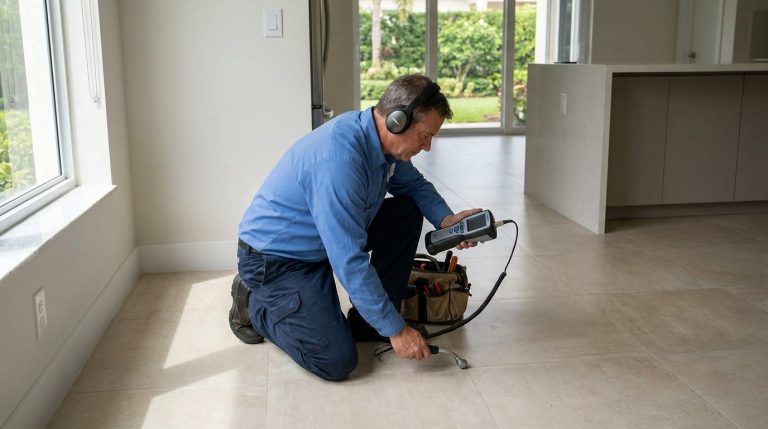
Protect your home and your wallet by learning the non-negotiable steps for vetting a plumber in South Florida, especially before hurricane season. You can verify any Florida plumber on the Florida DBPR license lookup before hiring.
As of August 2026, the safest way to hire a plumber in Florida is to first verify their state license number on the DBPR portal, then confirm they carry both general liability and worker's compensation insurance, and finally, get a detailed, written estimate before any work begins. This process protects you from fraud, shoddy work, and legal liability.
To properly vet a Florida plumber, start by checking their license on the state's official website. You must then request a Certificate of Insurance (COI) to prove they're covered. Finally, review their online reputation and insist on a written contract that details the scope of work and total cost.
Why Does Hiring a Licensed Plumber Matter in Florida?
Hiring a licensed plumber isn’t just about following rules; it’s about protecting your biggest investment—your home. In Florida, and especially in areas like Boca Raton with its specific building codes and high water table, the stakes are even higher. A licensed plumber provides a level of assurance that an unlicensed handyman simply cannot match.
Here’s what that license really means for you:
- Code Compliance: Florida has stringent building codes designed to protect homes from issues like hurricane damage and water intrusion. A licensed plumber is trained on and tested for these codes. Unlicensed work can fail inspection, forcing you to pay to have it all redone correctly.
- Insurance Protection: This is critical. A licensed plumbing contractor is required by the state to carry both general liability and worker’s compensation insurance. If an uninsured worker gets hurt on your property or causes a catastrophic flood, you could be held personally and financially responsible.
- Accountability: When you hire a licensed plumber, you’re hiring a professional with a state-issued credential on the line. If something goes wrong, you have recourse through the Florida Department of Business and Professional Regulation (DBPR). With an unlicensed individual, you have virtually no recourse if they disappear or do a poor job.
- Technical Expertise: From understanding the hard water common in Boca Raton to properly securing pipes for hurricane season, a licensed pro has the specific local knowledge to do the job right. They are trained to handle complex systems, from slab leaks to whole-home repiping.
"The most expensive plumbing job is the one you have to pay for twice. Hiring an unlicensed person to save a few dollars is often the first payment on a much bigger, future problem."The Master Plumber's Rule
Licensed Plumber vs. Handyman: What's the Real Difference?
It can be tempting to call a local handyman for a seemingly small plumbing issue, but the differences in qualifications, insurance, and legal authority are vast. Understanding these distinctions is key to protecting your property.
| Criteria | Handyman / Unlicensed Individual | Licensed & Insured Plumber |
|---|---|---|
| License & Training | None required. Skills are often self-taught with no formal testing or continuing education. | State-verified training, passed rigorous exams, and required to complete continuing education on code updates. |
| Insurance Coverage | Typically carries no worker's comp or general liability insurance, placing all risk on the homeowner. | Required to carry both worker's compensation and general liability insurance, protecting you from accidents and property damage. |
| Scope of Legal Work | Legally limited to very minor tasks like changing a showerhead. Cannot legally touch water heaters, move pipes, or open walls. | Legally authorized to perform all types of plumbing work, from simple repairs to major installations and renovations. |
| Permitting Authority | Cannot pull permits for work. Any work requiring a permit is done illegally. | Authorized to pull all necessary permits from the city or county, ensuring work is inspected and up to code. |
| Code Knowledge | No verified knowledge of the Florida Building Code, leading to unsafe and non-compliant work. | Expert knowledge of local and state plumbing codes is a core part of their licensing. |
| Accountability | No governing body to report issues to. If they disappear, you have little recourse. | Accountable to the state licensing board (DBPR), providing a formal complaint process for homeowners. |
| Best For | Extremely minor, non-plumbing tasks like tightening a loose cabinet handle. | Any plumbing task, from a dripping faucet to a full sewer line replacement. The only safe choice for your home's plumbing system. |
Key takeaway — A licensed plumber offers legal protection, code compliance, and accountability that a handyman cannot, making them the only safe choice for your home’s plumbing system.
How Can I Verify a Plumber's License and Insurance?
Trust, but verify. This is the golden rule of hiring any contractor in Florida. Fortunately, the state makes it easy to check a plumber’s credentials online. Never take someone’s word for it; perform this check yourself before letting them into your home. It only takes two minutes.
Here is your step-by-step vetting process:
- Ask for the License Number: A legitimate plumber will have their license number on their business card, website, and vehicle. It will typically look like ‘CFC’ followed by numbers (e.g., CFC1234567). If they are hesitant to provide it, that’s a major red flag.
- Verify with the DBPR: Go to the Florida Department of Business and Professional Regulation’s official website. You can search by name or license number. The search result should show the license holder’s name, license status (it must say ‘Current, Active’), and any complaints filed against them. (Florida DBPR License Search)
- Request a Certificate of Insurance (COI): Don’t just ask, \”Are you insured?\”. Ask them to email you a copy of their Certificate of Insurance. This document will list their policy numbers and coverage limits for both General Liability and Worker’s Compensation. Check the expiration dates to ensure the policy is current.
- Match the Names: Ensure the name on the license and the insurance certificate matches the company name you are hiring. Sometimes, an individual might use a company’s license number without actually working for them.
I've Seen What Happens When You Skip These Steps.
With over 25 years of experience, I’ve been the one called in to fix the disasters left by unlicensed workers. I've seen brand new water heaters installed without critical safety valves, and illegal pipework hidden behind freshly closed walls. This is especially heartbreaking for our seasonal residents who return to a flooded home because a 'handyman' didn't understand local codes.
That's why I operate this business myself. When you call us, you're not getting a random, inexperienced tech. You're getting a master plumber who takes personal responsibility for every job. Taking a few minutes to verify their credentials is the best insurance policy you can have against a costly and dangerous mistake.
What Questions Should I Ask Before Work Begins?
Once you’ve verified a plumber’s license and insurance, the next step is to interview them to ensure they’re the right fit for your job and your home. Their answers will reveal their professionalism, experience, and transparency.
Here are essential questions to ask:
- How long have you been in business in the Boca Raton area? This helps gauge their familiarity with local infrastructure, common issues (like aging cast iron pipes), and municipal permitting processes.
- Do you provide a detailed, written estimate before starting? A verbal quote is not enough. Demand an itemized estimate that breaks down labor and material costs.
- What are your payment terms? Be wary of anyone demanding 100% payment upfront. A deposit for materials on a large job is normal, but final payment should only be made upon satisfactory completion.
- Who will be performing the work? Are you speaking with the owner who will also be the one on-site, or will they be sending a different crew of technicians? Knowing who will be in your home is important.
- What kind of warranty do you offer on your workmanship? In addition to the manufacturer’s warranty on parts (like a water heater), the plumber should guarantee their own labor for a period of time. Get this in writing.
- Are you able to handle the full scope of plumbing services? While you might only have a small leak now, it’s good to know if they can handle larger issues that might be discovered during the repair.
- How do you handle emergencies or after-hours calls? Knowing their process for urgent situations, like emergency leak repairs, is crucial for any homeowner.
Common Mistakes Homeowners Make When Hiring a Plumber
Even with the best intentions, homeowners can fall into common traps. Being aware of these pitfalls is the first step to avoiding them.
Choosing Based on Price Alone
An unusually low bid is a major red flag. It often means the person is unlicensed, uninsured, using cheap materials, or plans to 'find' more problems once they start. Quality work from a licensed professional costs more for a reason: insurance, training, proper tools, and accountability.
Not Getting a Written Contract
A verbal agreement is worthless if a dispute arises. A professional contract protects both you and the plumber. It should detail the scope of work, total cost, payment schedule, and warranty information. Never proceed without one for any significant job.
Paying in Full Upfront
Never pay the entire job cost before the work is 100% complete and you have inspected it. This removes all your leverage if the work is subpar or left unfinished. A reasonable deposit is standard, but final payment is for a completed job.
Ignoring Online Reviews and Reputation
In today's world, it's easy to check their reputation. Look at Google, Yelp, and other local directories. Pay attention to how the company responds to both positive and negative reviews. A consistent pattern of poor feedback is a clear warning sign.
Failing to Discuss Permits
Forgetting to ask about permits for larger jobs (like a water heater replacement) can cause huge problems later. Work done without a required permit can void your homeowner's insurance and create issues when you try to sell your home. A licensed pro handles this for you.
The Bottom Line: Your Hiring Decision Framework
Knowing who to call and when is key. Here’s a simple framework for making the right choice based on your situation.
Water is actively leaking, a sewer is backed up, or you have no hot water.
Your priority is a fast response, but vetting is still mandatory. Your first call should be to a 24/7 licensed plumber with a proven local reputation.
You're upgrading a fixture, replacing an old water heater, or planning a remodel.
You have time on your side. Use it to get 2-3 detailed, written estimates from highly-rated, licensed, and insured plumbers. Compare their proposals, not just the final price.
You received a cash-only deal, a quote without an inspection, or a high-pressure sales pitch.
This is a major red flag. Reputable professionals provide written estimates, accept multiple payment forms, and do not use pressure tactics. An unusually cheap offer is a warning.
Your Florida Plumber Pre-Hire Checklist
Before You Say 'Yes'
Use this checklist for every plumber you consider to ensure you're making a safe and informed decision.
- License Number Obtained. Did they provide their Florida 'CFC' license number freely?
- DBPR License Verified. Did you check their license on the state website and confirm it's 'Current, Active'?
- Insurance Confirmed. Have you received and reviewed their Certificate of Insurance (COI)?
- Written Estimate Received. Is the estimate detailed, itemized, and does it include the total cost?
- Scope of Work Clear. Do you fully understand what work will be performed?
- Warranty Understood. Have they explained the warranty on both parts and workmanship in writing?
- Permits Discussed. If it's a large job, have you confirmed who is responsible for pulling permits?
- Online Reviews Checked. Have you looked them up on Google and seen what other Boca Raton customers are saying?
- Payment Terms Agreed. Are the payment terms reasonable, with final payment due upon completion?
- Professionalism Assessed. Did they communicate clearly, arrive on time, and answer your questions patiently?
Frequently Asked Questions
What is the difference between a licensed plumber and a master plumber in Florida?
In Florida, a licensed plumber (often called a journeyman) is certified to perform plumbing work. A Master Plumber has demonstrated a higher level of experience and knowledge, passed a more rigorous exam, and is legally qualified to pull permits, supervise other plumbers, and own a plumbing business. Hiring a company led by a Master Plumber ensures the highest level of expertise is overseeing your project.
Do I need a permit for a simple plumbing repair in Boca Raton?
Generally, minor repairs like fixing a leaky faucet or clearing a simple drain clog do not require a permit. However, major work such as replacing a water heater, repiping a section of your home, or altering drainage or vent lines absolutely requires a permit from the city of Boca Raton or Palm Beach County. A licensed plumber will know exactly when a permit is needed and will handle the entire process for you.
Is it illegal to hire an unlicensed plumber in Florida?
Yes, it is illegal for an individual to perform plumbing work in Florida without a license for jobs that require one. More importantly for the homeowner, hiring an unlicensed person puts you at significant risk. Their work won't be insured, it may not meet safety codes, and you could be held liable for any accidents or damages that occur on your property. Your homeowner's insurance may also deny claims related to unlicensed work.
Should a plumber ask for a large deposit upfront?
Reputable plumbers may ask for a deposit for large projects that require significant material purchases, such as a whole-home repipe or a water heater installation. However, this is typically a reasonable percentage (e.g., 25-50%), not the full amount. A major red flag is a demand for 100% payment upfront or a large cash payment before any work has started. Always use a credit card for deposits to retain buyer protection.
What kind of warranty should I expect on plumbing work?
A professional plumbing company should always offer a warranty on their workmanship. For repairs, this might be 30-90 days. For new installations, like a water heater, you should receive a manufacturer's warranty on the unit itself (often 6-12 years) and a separate workmanship warranty from the installer (typically at least 1 year). Always get the warranty details in writing on your final invoice.
Ready to Hire a Plumber You Can Trust?
Stop worrying about unlicensed work and shoddy repairs. At West Boca Water Heaters, you work directly with the owner, a licensed Master Plumber with over 25 years of experience. For honest advice, up-front pricing, and work done right the first time in Boca Raton, Delray Beach, and Boynton Beach, contact us today.